RAF Burtonwood and Building 28
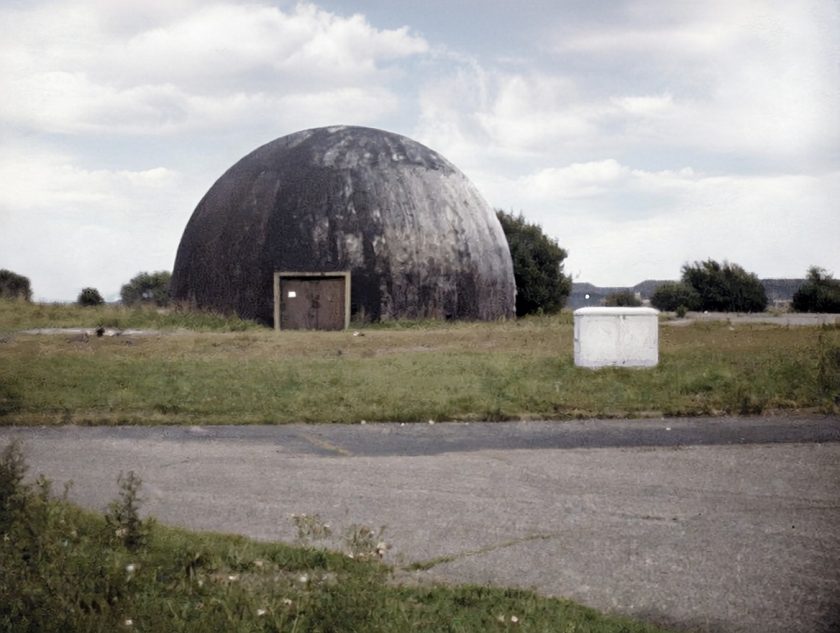
RAF Burtonwood, also designated as United States Army Air Force Station 590 and Base Air Depot 1, was located near Warrington in England. Among its many structures was Building 28 – a synthetic gunnery training dome situated on the technical site. This particular dome was constructed from reinforced concrete and built to Air Ministry Drawing Number 73/42. Sadly, the Burtonwood example has since been demolished.
Origins of the Dome Trainer
The story of the Dome Trainer begins with Royal Navy Lieutenant Commander Henry Christian Stephens RNVR. A veteran of the First World War who had been present at the Battle of Jutland, Stephens re-enlisted in the Royal Naval Volunteer Reserve when the Second World War broke out. The inspiration for his invention came in 1940 whilst watching newsreel footage of gunners attempting to shoot down enemy aircraft. He noticed how difficult it was for them to accurately judge speed, distance, and the correct amount of lead needed to hit fast-moving targets. This observation sparked an idea that would go on to transform anti-aircraft training.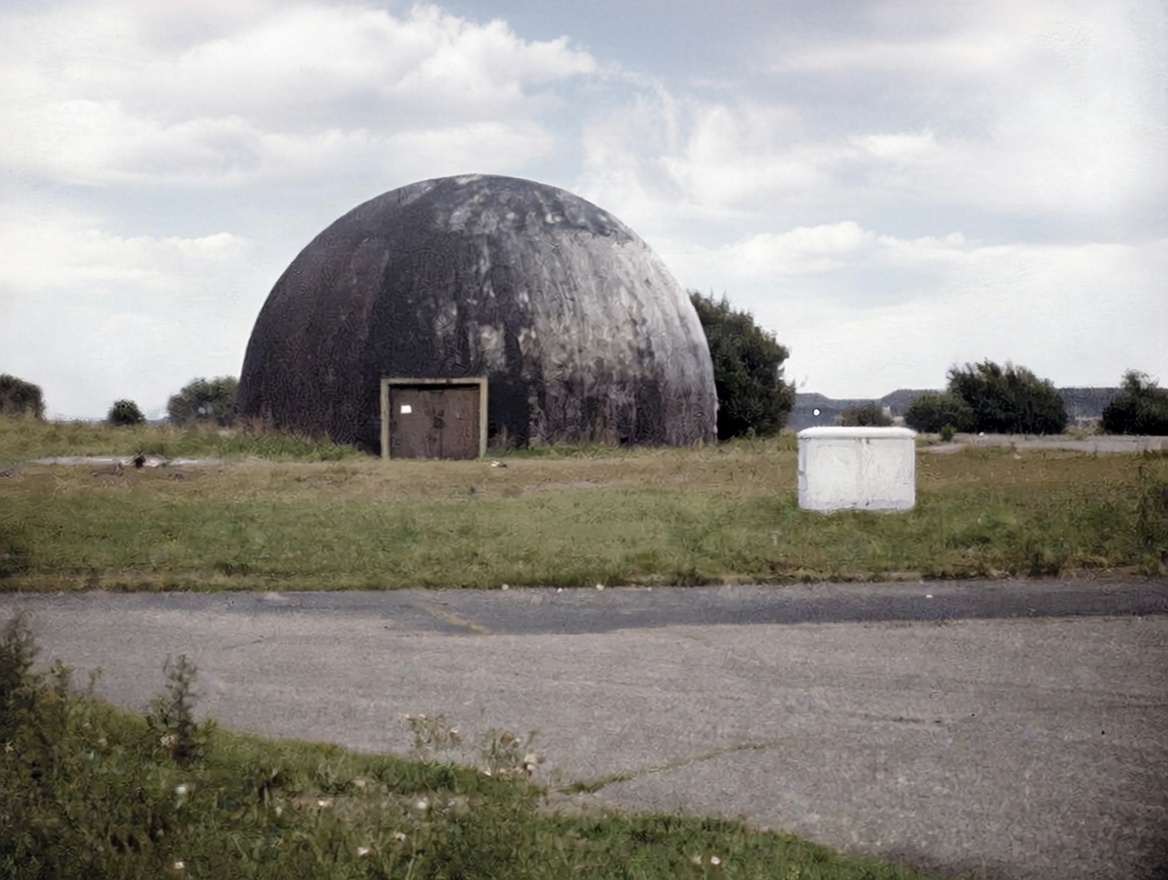
Stephens set about developing a solution. He collaborated with experts from Kodak and Technicolor to create a sophisticated cinematographic projection system. The result was the Dome Trainer – also known as the Dome Teacher or Synthetic Gunnery Trainer – an innovative simulator that allowed gunners to practise their skills in complete safety.
How the Dome Was Built
The trainer took the form of a hemispherical dome constructed from reinforced concrete. Each dome stood approximately 25 feet (7.6 metres) tall and measured around 40 feet (12.2 metres) in diameter. The curved interior surface served as a giant projection screen, creating an immersive training environment.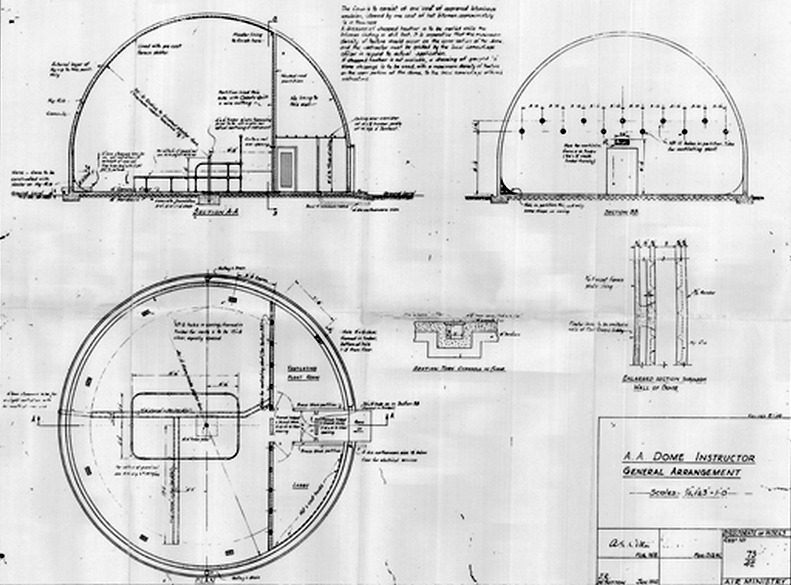
Specialised stop-frame projectors displayed pre-filmed sequences onto the dome’s inner walls. These films often featured real attack footage or carefully staged mock dive-bombing runs. Aircraft appeared to approach from various angles, swooping and banking across the curved surface in a remarkably realistic manner. Soundtracks added to the experience with engine noise and realistic battle effects, helping to create the stress and confusion of actual combat.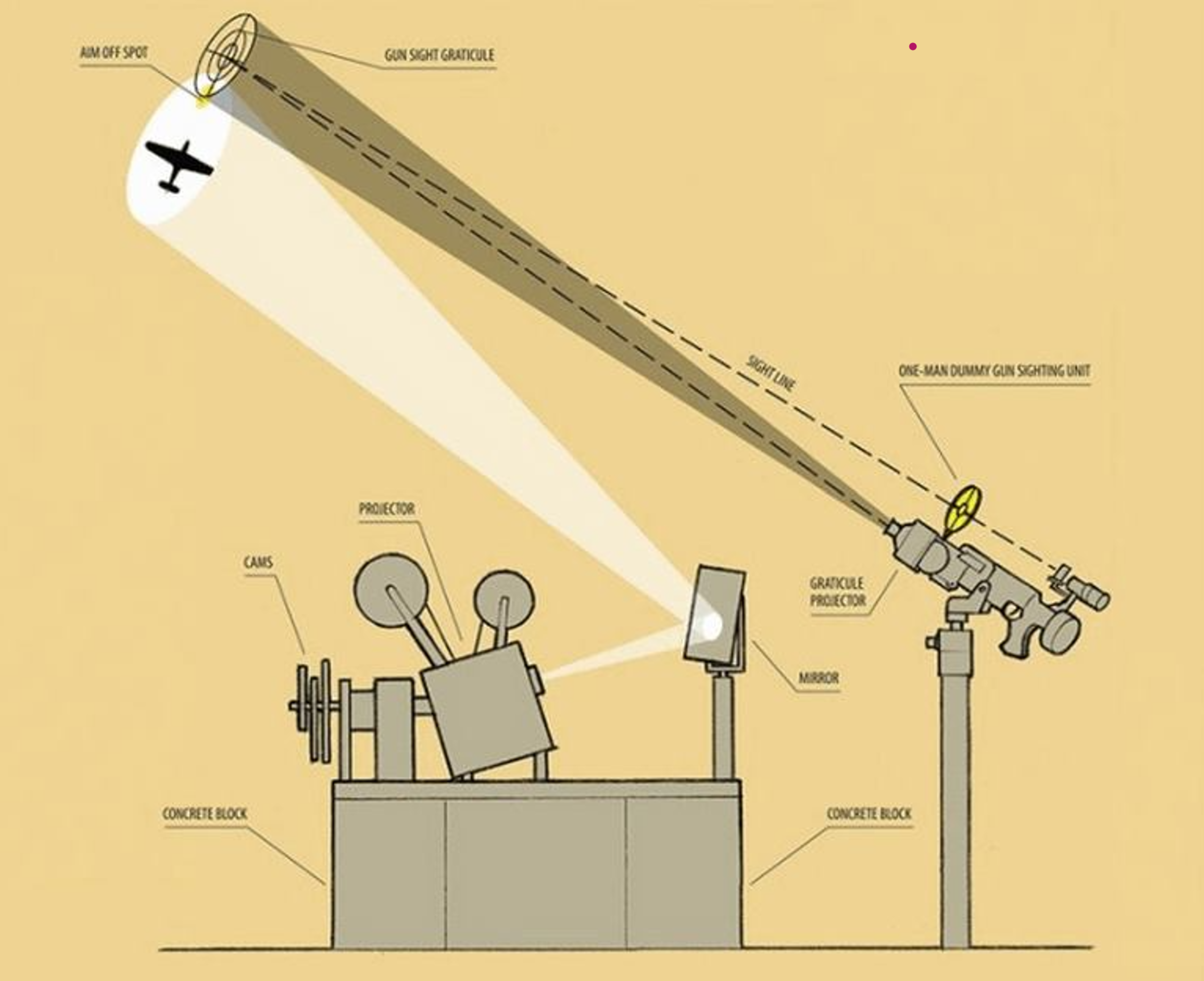
Training Inside the Dome
Trainees stood inside the dome equipped with replica weapons – typically mock Bofors guns or predictor sights. Each gun incorporated a small projector that cast a spot of light onto the dome’s surface. This allowed the instructor to see exactly where the gunner was aiming at any given moment. The system provided immediate feedback on tracking accuracy.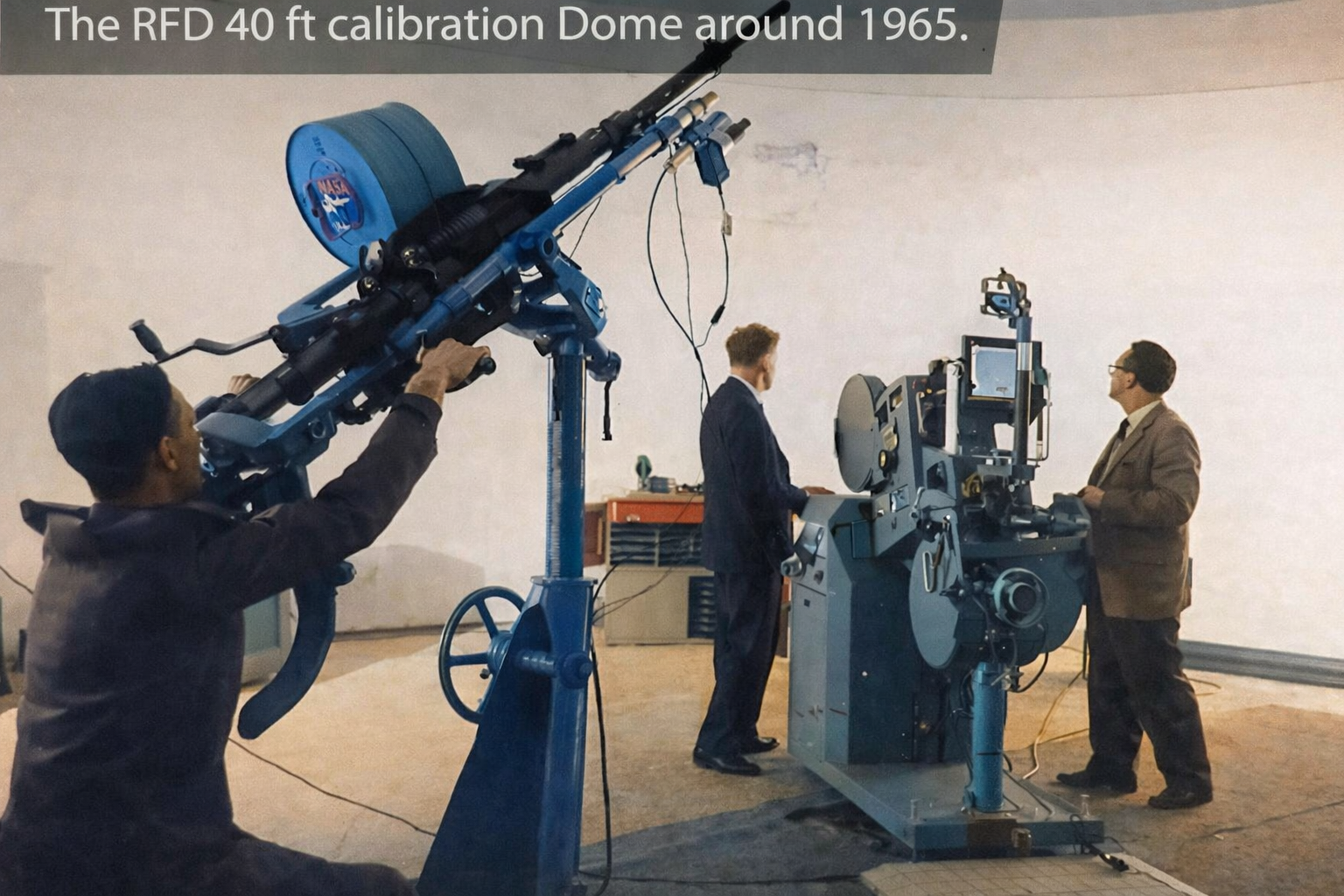
When a trainee pulled the trigger, several things happened simultaneously. The soundtrack played the distinctive noise of gunfire – a burst lasting approximately five seconds, which matched the time needed to empty a typical ammunition cartridge. At the same time, the system produced a flash of light at the calculated impact point for scoring purposes.
Here’s where the clever bit came in. Trainees wore yellow filter goggles during their sessions. These filters rendered the scoring flash invisible to them whilst remaining perfectly visible to the instructor. This design choice was crucial. It prevented gunners from self-correcting based on visual feedback and forced them to develop proper lead estimation skills without any artificial assistance.
A Revolutionary Approach to Training
This synthetic training method was genuinely revolutionary for its time. Before the Dome Trainer, anti-aircraft gunners had limited options for practising their skills. Live firing exercises were expensive, dangerous, and difficult to arrange. The dome allowed safe, repeatable practice under simulated combat conditions. Gunners could experience the pressure and stress of an attack without any real danger.
The results spoke for themselves. Anti-aircraft gunnery hit rates improved significantly after the introduction of dome training. Military historians now recognise the system as an important precursor to modern flight and combat simulators.
Production and Spread
Around 40 to 43 domes were constructed across the United Kingdom during the war years. The system proved so successful that it was exported widely. Over 300 dome trainers were eventually built worldwide, spreading the technology to allied nations.
Surviving Examples
Of the original British domes, only approximately six survive today. Most remain on former airfield sites as scheduled monuments, though public access is generally limited.
Langham Dome, Norfolk – This dome sits on the edge of the former RAF Langham site, near the village of Langham in north Norfolk. It represents the only surviving example that has been fully restored and now operates as a public museum. Visitors can explore exhibits explaining the trainer’s history, technology, and role in wartime anti-aircraft training. The dome is designated as a Scheduled Ancient Monument. Opening times are seasonal – typically from Easter through to early November. The museum opens Friday to Sunday from April to May, then Wednesday to Sunday plus bank holidays from June onwards. Hours are generally 10am to 4pm, with entry fees applying. Check langhamdome.org for current information.
Shoreham Airfield Dome, West Sussex – Located at Shoreham Airport (also known as Brighton City Airport) near Shoreham-by-Sea, this dome is visible from the A27 road south of the Sussex Pad Hotel. It holds scheduled monument status but remains in derelict condition. The structure suffered fire damage at some point and underwent partial restoration during the 1990s. Unfortunately, it has since deteriorated further. The dome stands intact but overgrown and unused on private airfield land. Interior access is not available to the public, though the exterior can be viewed from nearby roads or the airport perimeter.
Limavady (Aghanloo) Dome, County Londonderry, Northern Ireland – This dome stands in a field on the former RAF Limavady airfield site, near Aghanloo village north of Limavady town. It holds scheduled monument status but is in private ownership and currently serves as a temporary stable. The structure is in poor condition, suffering from significant concrete degradation, corrosion, and waterproofing failure. Conservation experts consider it at risk without further intervention. The dome sits on private agricultural land and is not accessible to the public.
Mildenhall Dome, Suffolk – This example is located on or near the active RAF/USAF Mildenhall base. Access is restricted due to the site’s ongoing military use.
Pembrey Dome, Carmarthenshire, Wales – Found on the site of the former RAF Pembrey, which now forms part of the Pembrey Sands Air Weapons Range and Country Park area. The dome’s current condition remains unclear, though it is confirmed to still exist.
Wyton Dome, Cambridgeshire – Situated near RAF Wyton, which remains an active Ministry of Defence site. Public access is restricted accordingly.
A Legacy Worth Preserving
These surviving domes represent a rare and fascinating piece of military training history. Their innovative use of projection technology to create realistic combat scenarios was decades ahead of its time. For anyone interested in visiting a dome trainer, Langham offers the most complete and visitor-friendly experience when open. Those simply wishing to see what a dome looks like from the outside will find Shoreham the most accessible option.
The Dome Trainer stands as a testament to wartime ingenuity – a simple yet effective solution to a complex training problem that saved countless lives by preparing gunners for the realities of aerial combat.